Every year, three brothers loaded their flock onto a truck in eastern Turkey and drove west to Istanbul. Their plan was simple: sell every animal during Kurban Bayramı — the Feast of Sacrifice — and return home with a year’s profit.
Eid al-Adha commemorates the Prophet Ibrahim’s willingness to sacrifice his son in obedience to God. Before the blade could fall, God intervened and sent a ram in the boy’s place. For over a thousand years, Muslims have honoured this act of devotion by sacrificing an animal and dividing its meat into three equal parts — one for the family, one for relatives and neighbours, and one for the poor. In Turkey, this four-day holiday is the most important religious celebration of the year.
In 2009, in the Feriköy-Bomonti neighbourhood of Istanbul, open lots still became temporary livestock markets each autumn. Shepherds and traders erected makeshift shelters from scrap wood, corrugated metal and tarpaulin, and lived among the animals for the duration of the festival — sleeping on the ground, cooking on portable stoves, keeping accounts in handwritten ledgers. No running water. No electricity. No separation between commerce and prayer, labour and rest.
Today, these improvised camps no longer exist. Municipal regulations now require all sacrificial slaughter to take place in designated, hygiene-controlled facilities operated by the city. The empty lots of Feriköy have been replaced by luxury residential developments. The brothers, and the world they briefly inhabited each year, have left no trace.
I spent the four days of Kurban Bayramı 2009 inside their shelter. This is what I saw.
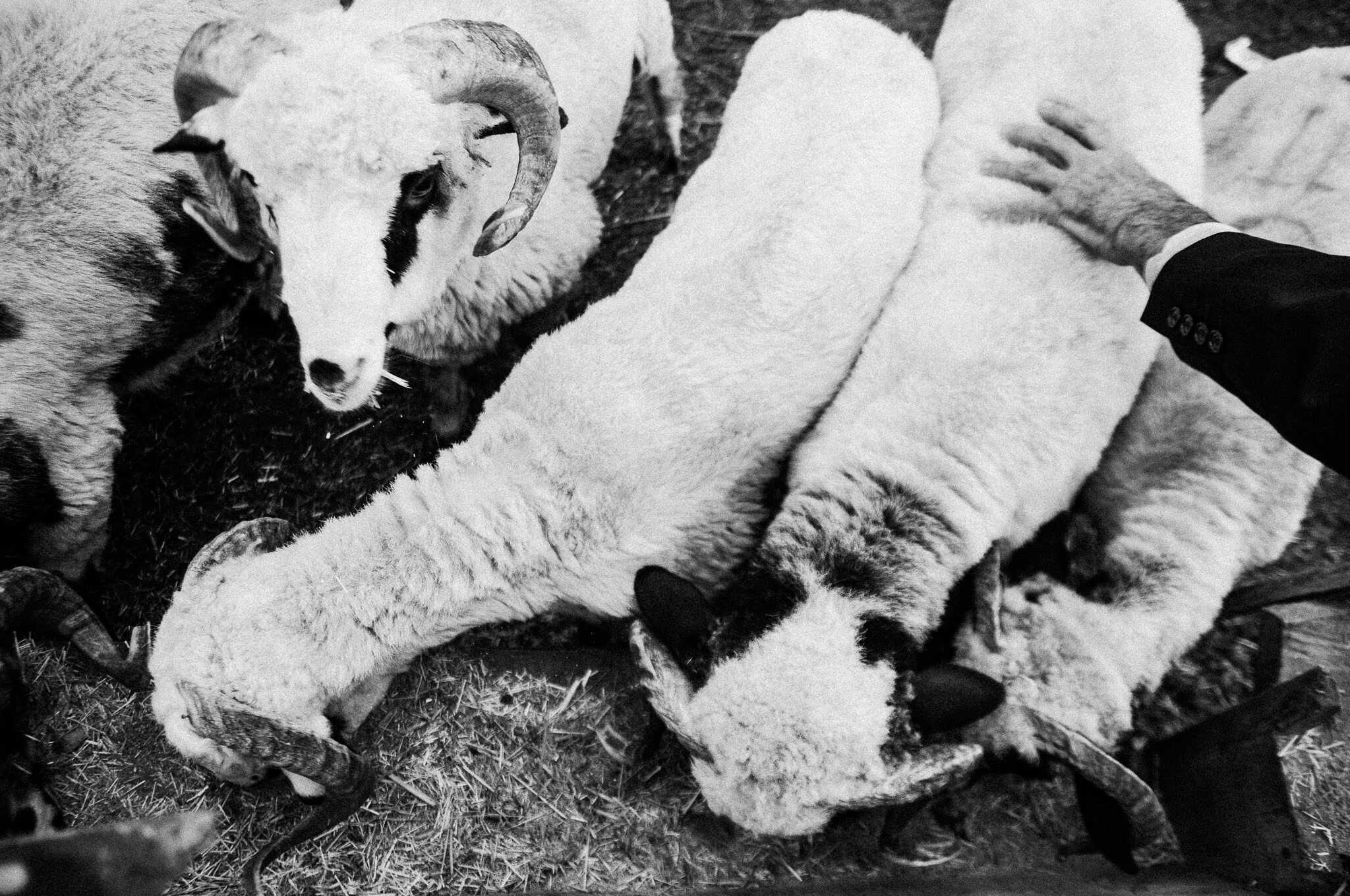
Soft wool, firm grip. A hand in a suit jacket selects the animal that will feed his family. The transaction has not yet begun, but the outcome is already decided.
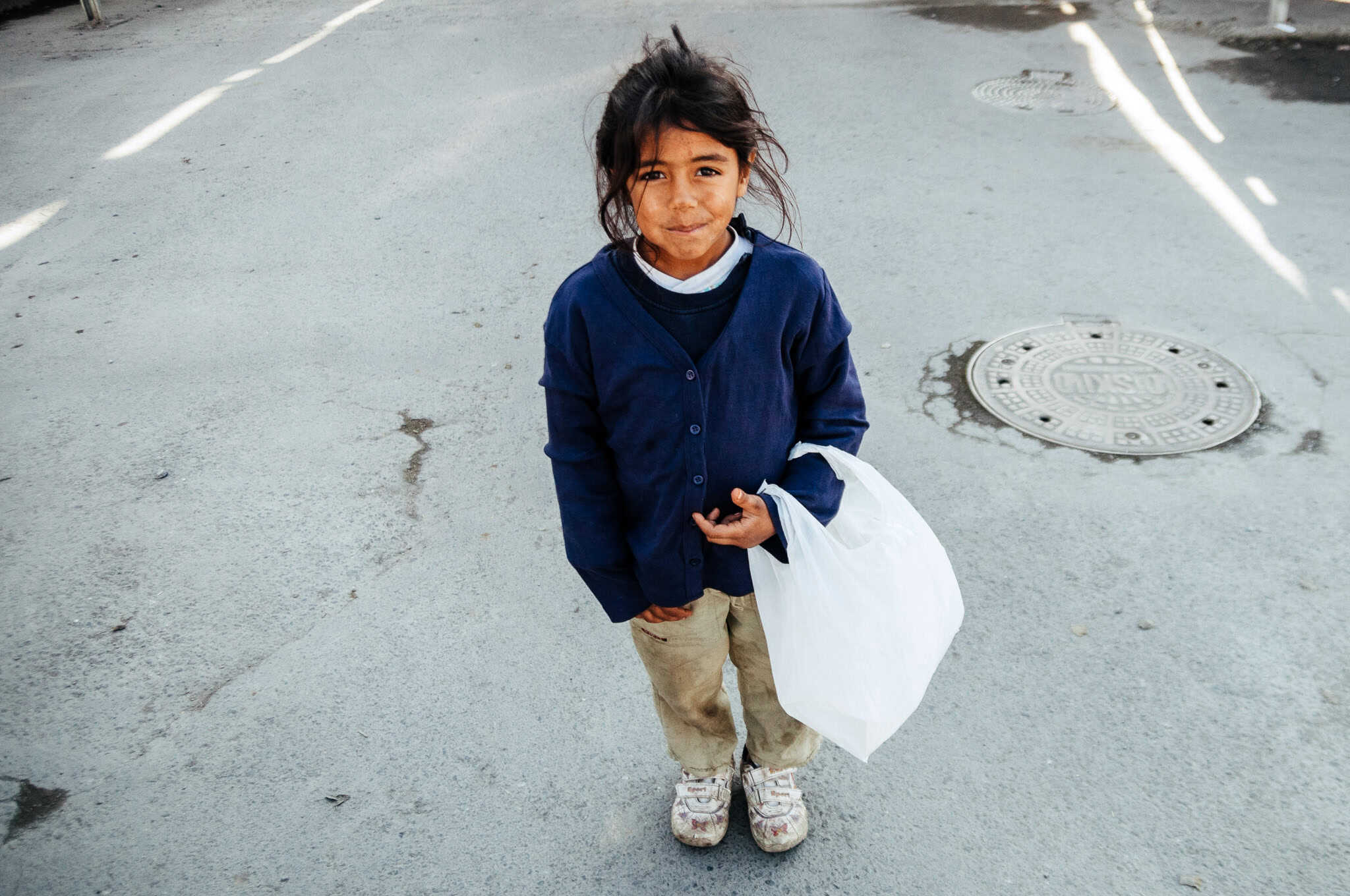
A girl arrives with a plastic bag. Some families cannot afford a whole animal. They send their children to collect whatever meat is offered.
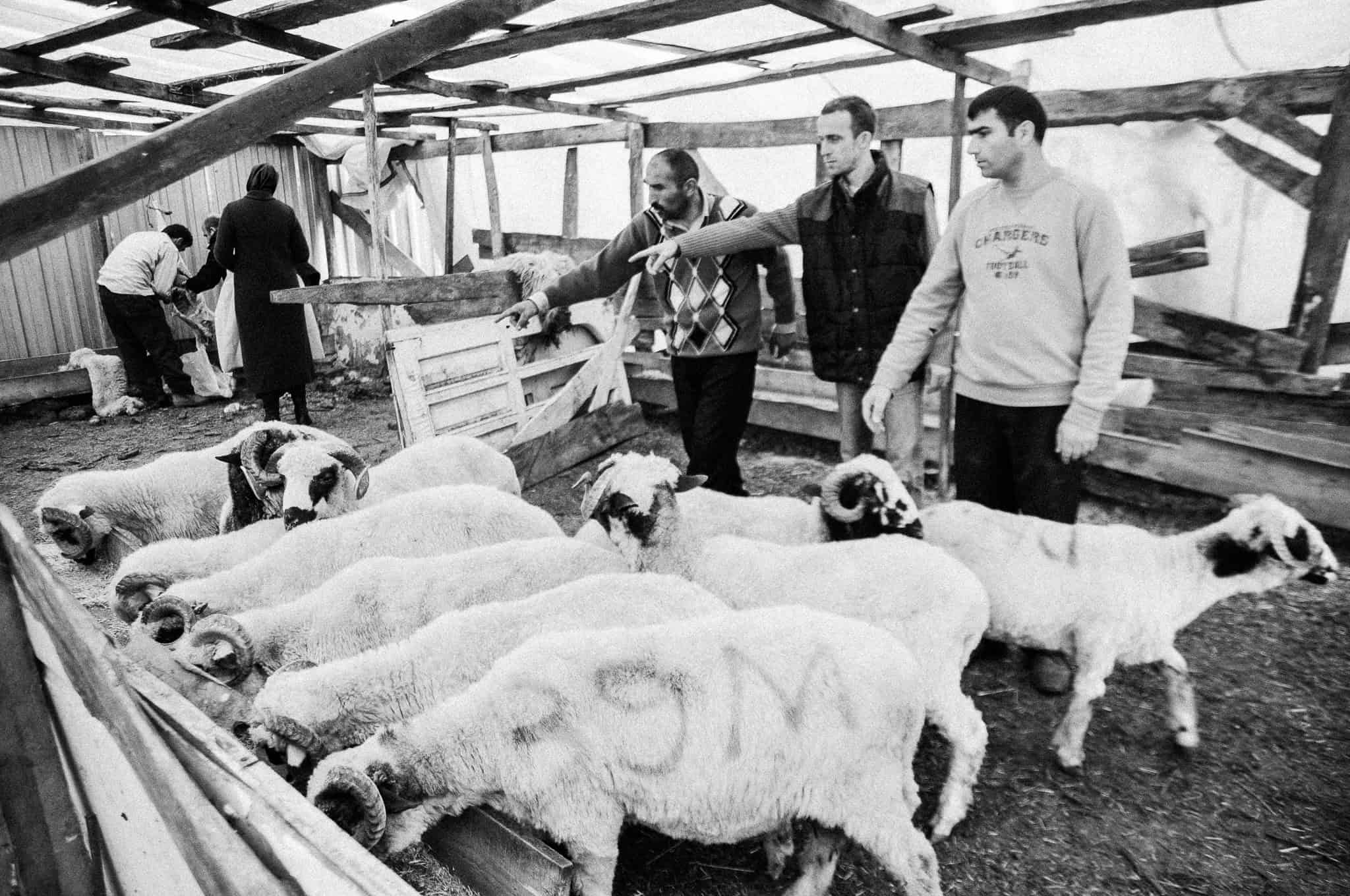
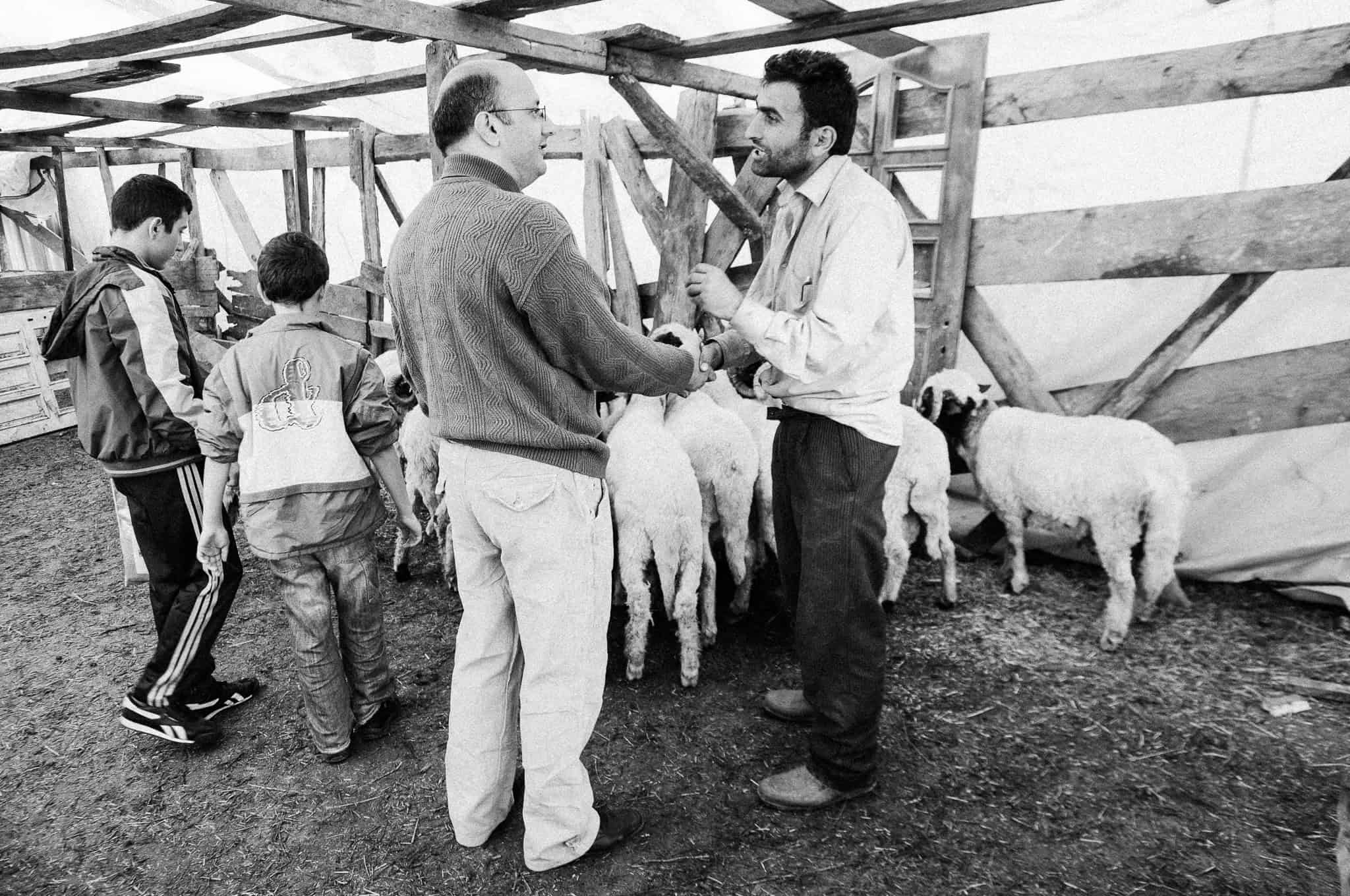
The buyer points. The seller watches. Every animal has a price determined by its size, and the negotiation has not yet started.
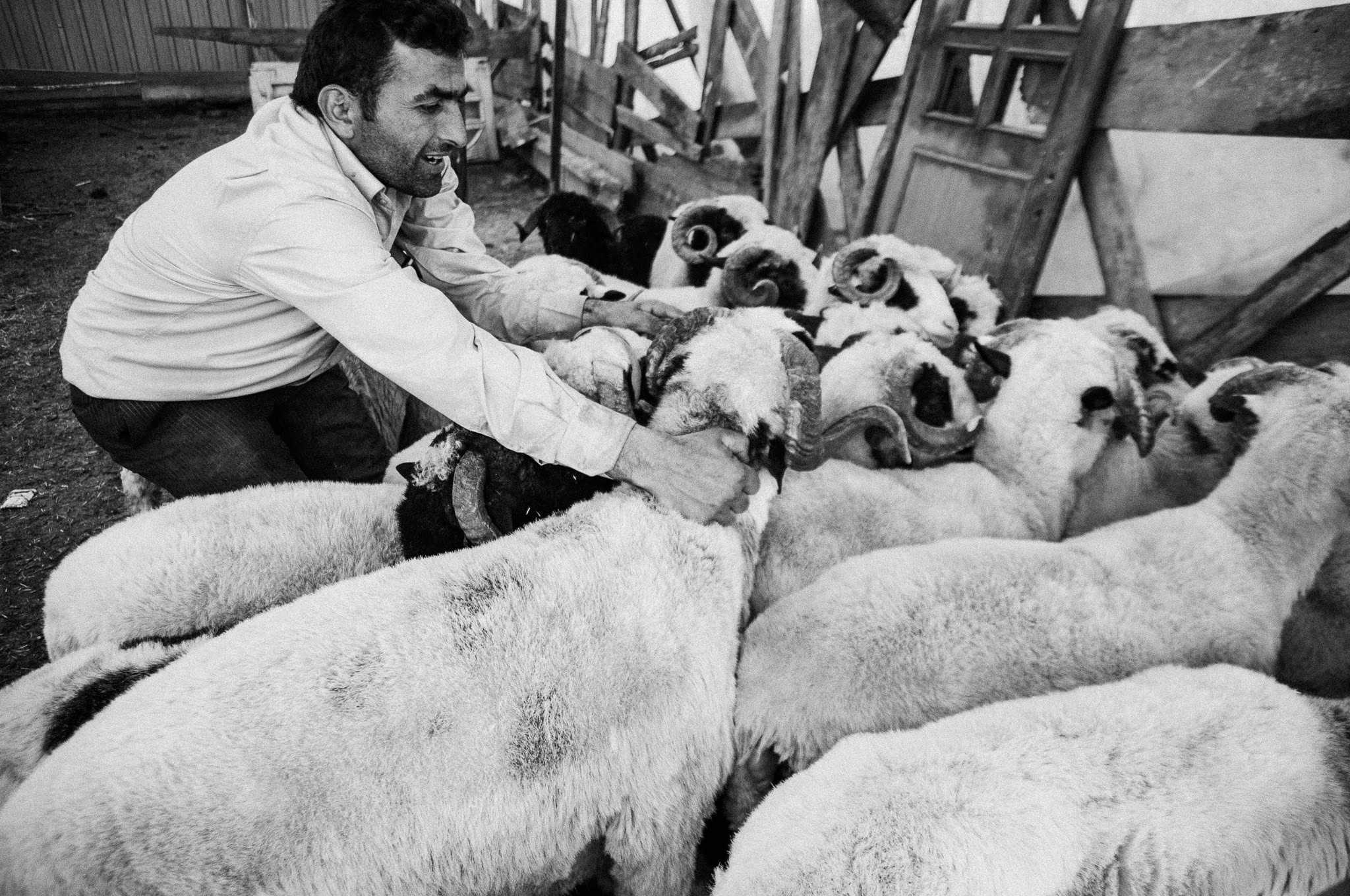
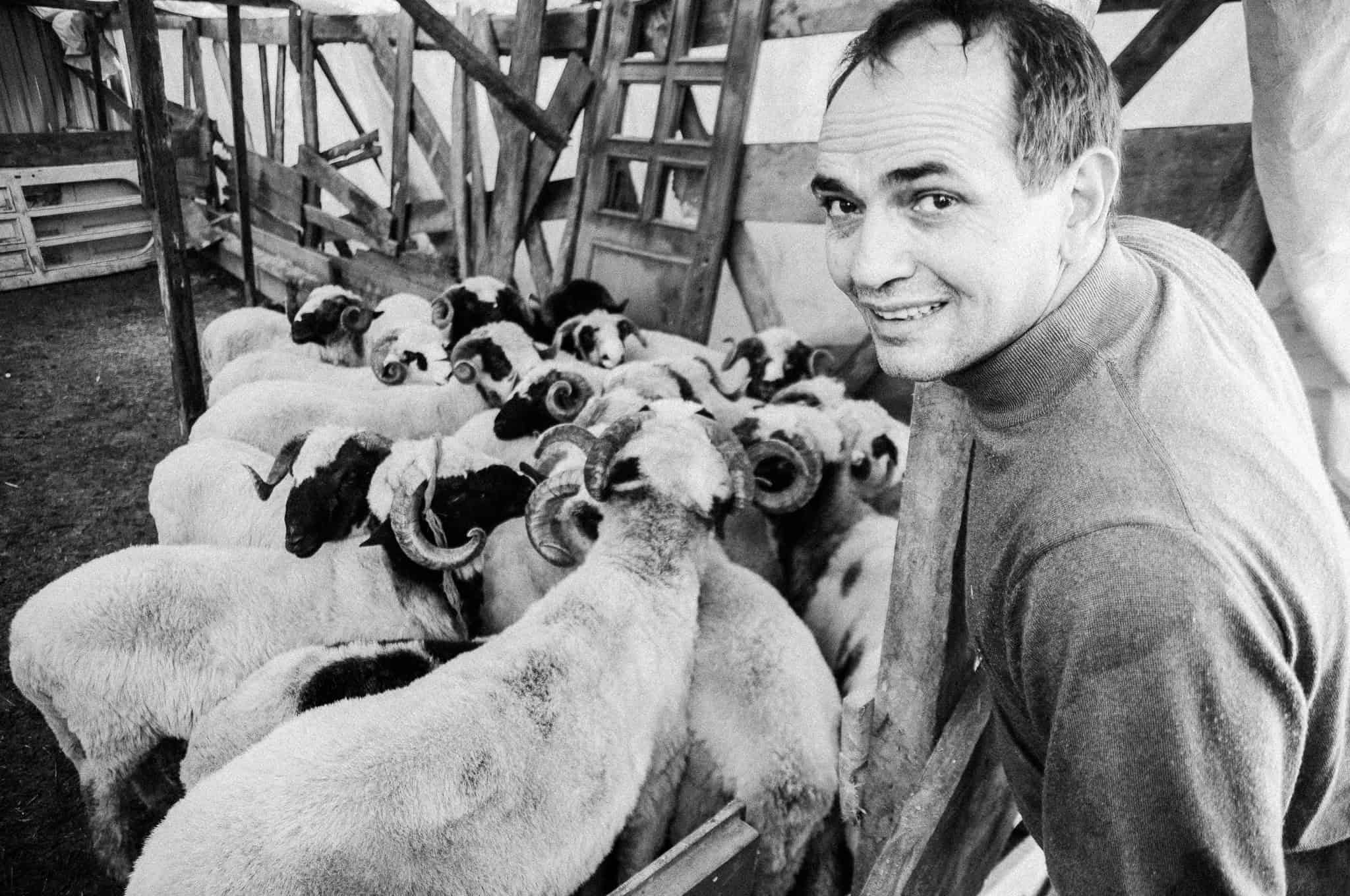
The chosen ram is pulled from the flock. The trader handles it with the practised ease of someone who has done this since boyhood.
A buyer inspects the flock. Every animal has a price determined by its size — and the decision has not yet been made.
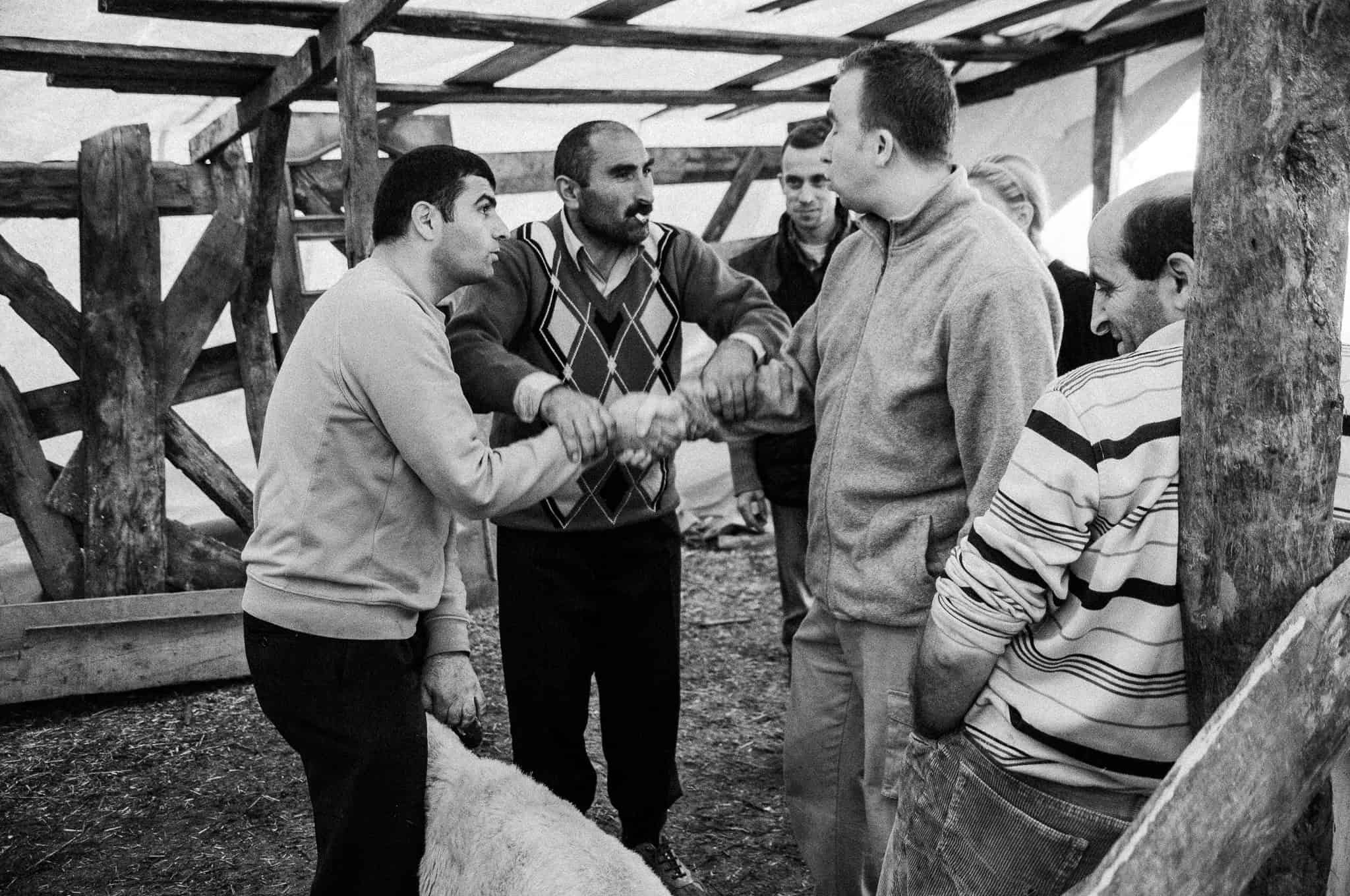
Buyer and seller face each other across the animal. Children watch from the edges. In this market, bargaining is a handshake that doesn’t let go — hands are clasped and shaken until a price is agreed. If they cannot find common ground, a third person grabs both hands and mediates until they do.
The mediator steps in. Three pairs of hands, one price to settle. Nobody releases their grip until the deal is done.
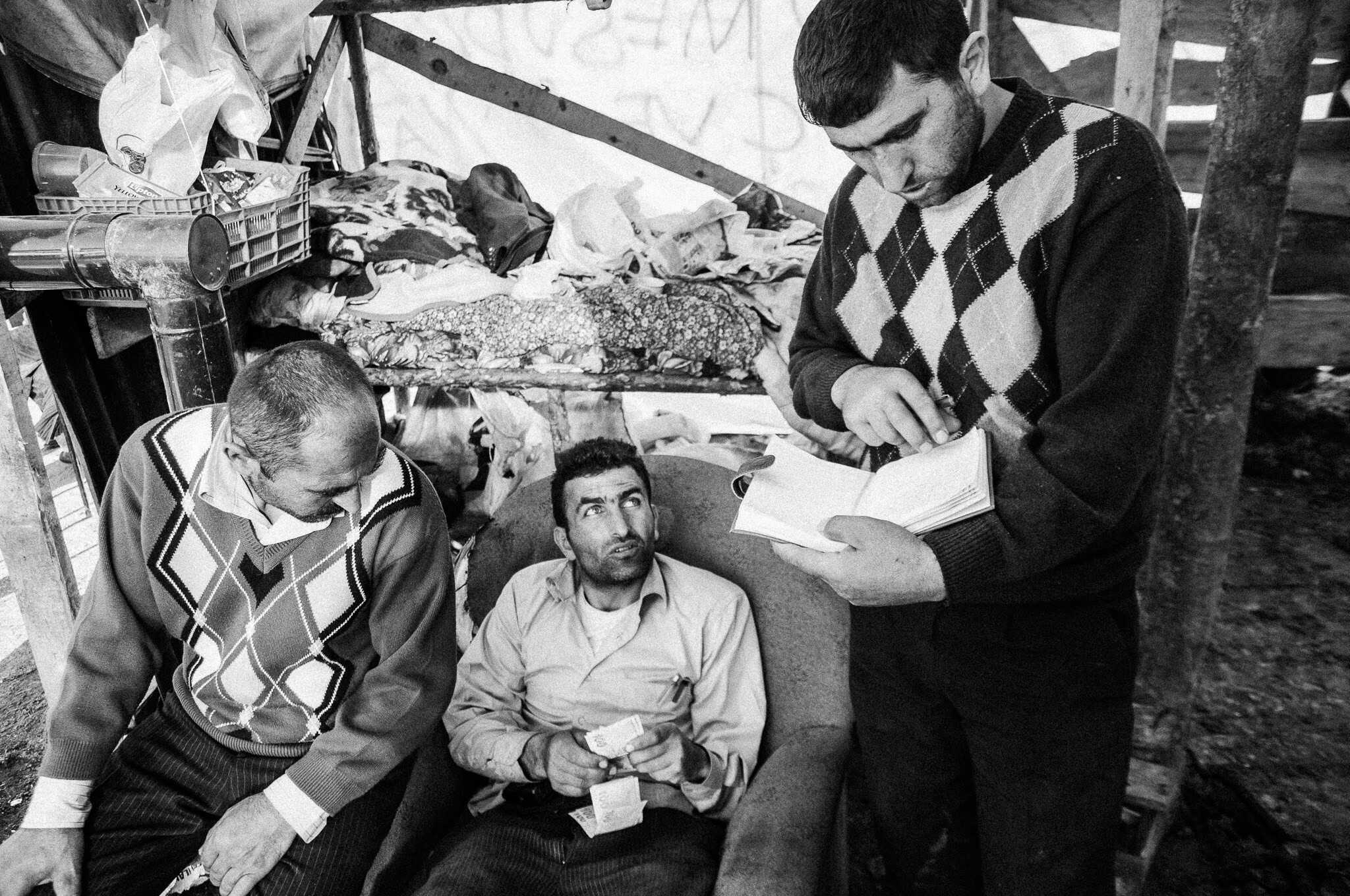
After the sales, the accounts. Turkish lira counted by hand, a ledger balanced on a knee. This is the back office — a corner of the shelter where the brothers sleep, eat, and track whether the season will end in profit or loss.
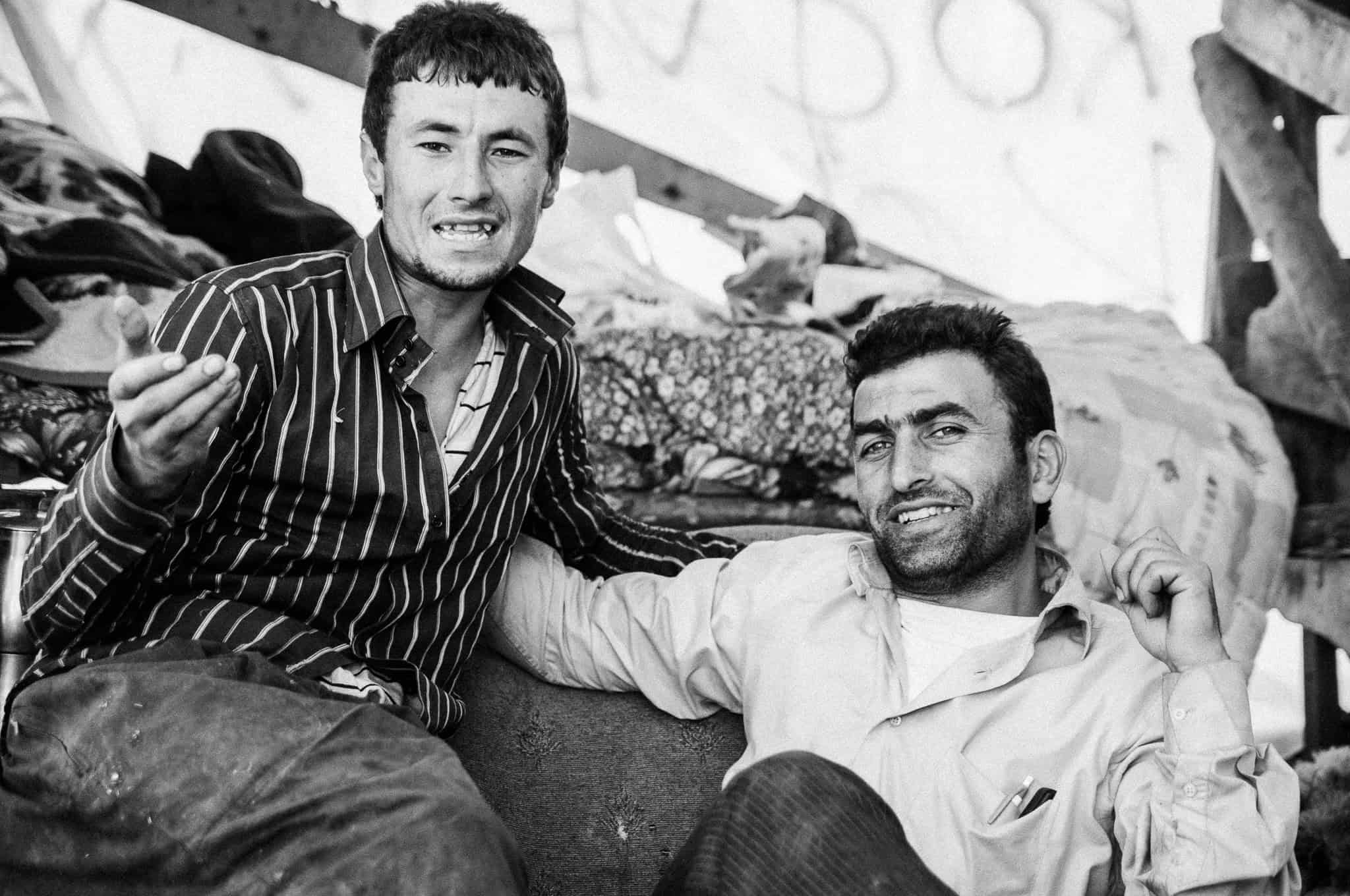
Between customers, rest. Two of the brothers lean against blankets and rolled-up bedding. For four days, this shelter is home.
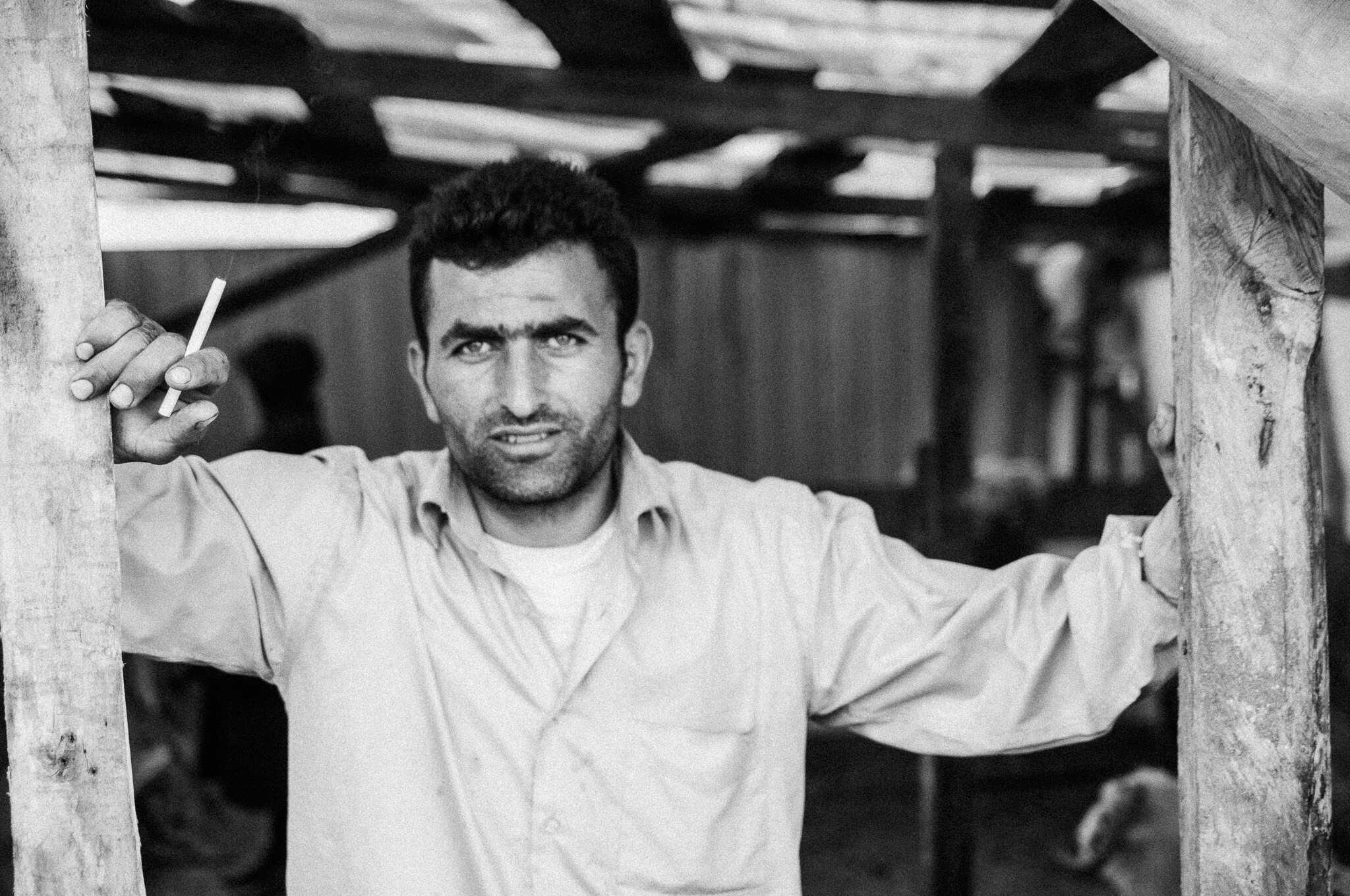
The eldest brother, framed by the wooden posts of the shelter he built. A cigarette, a steady gaze, and the patience of someone who has done this many times before.
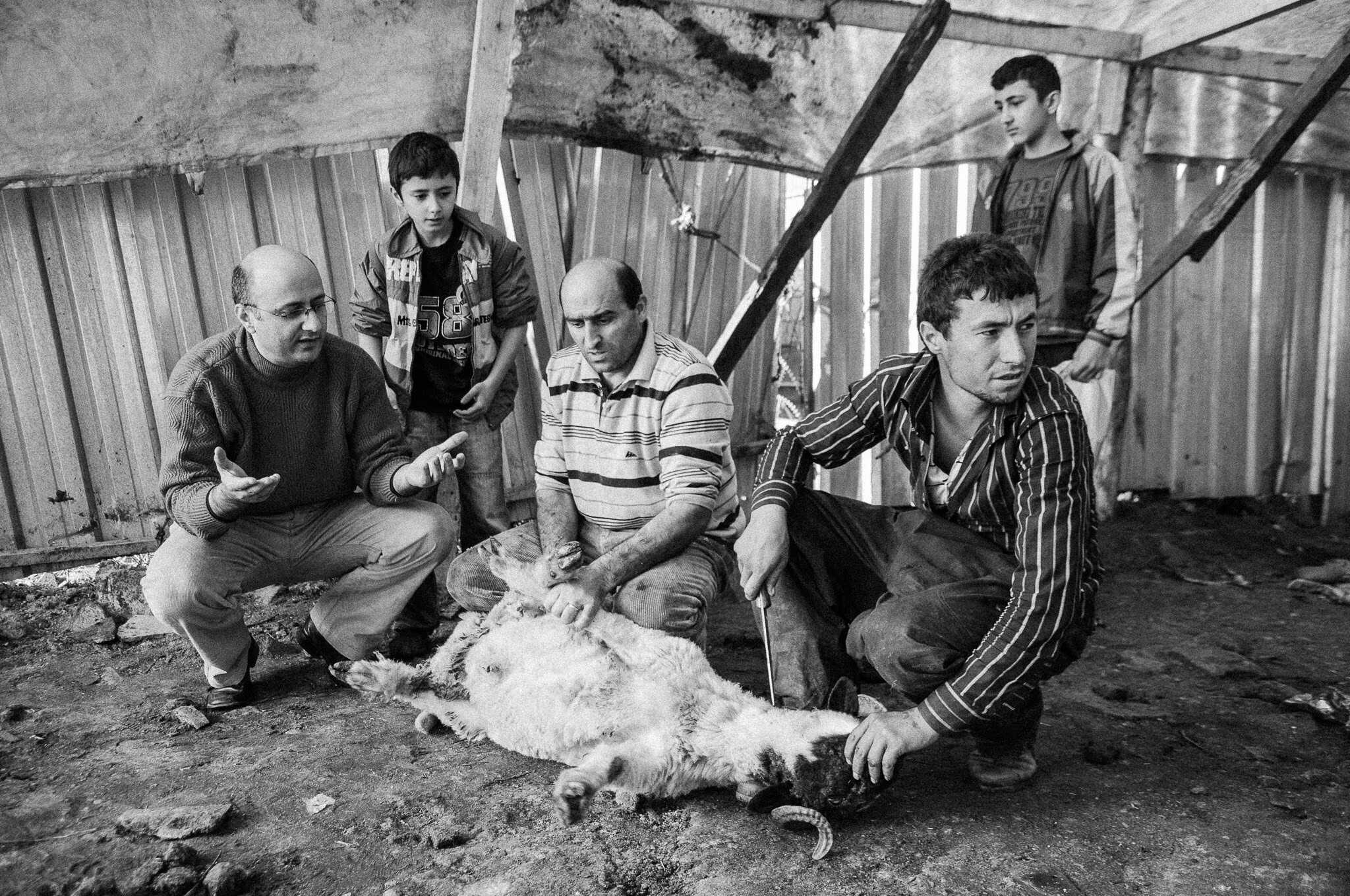
Before the knife, the prayer. The animal is laid on its side, facing Mecca. The man on the left recites from the Quran with open palms. His companions hold the animal still. This is the moment the ritual becomes sacred.
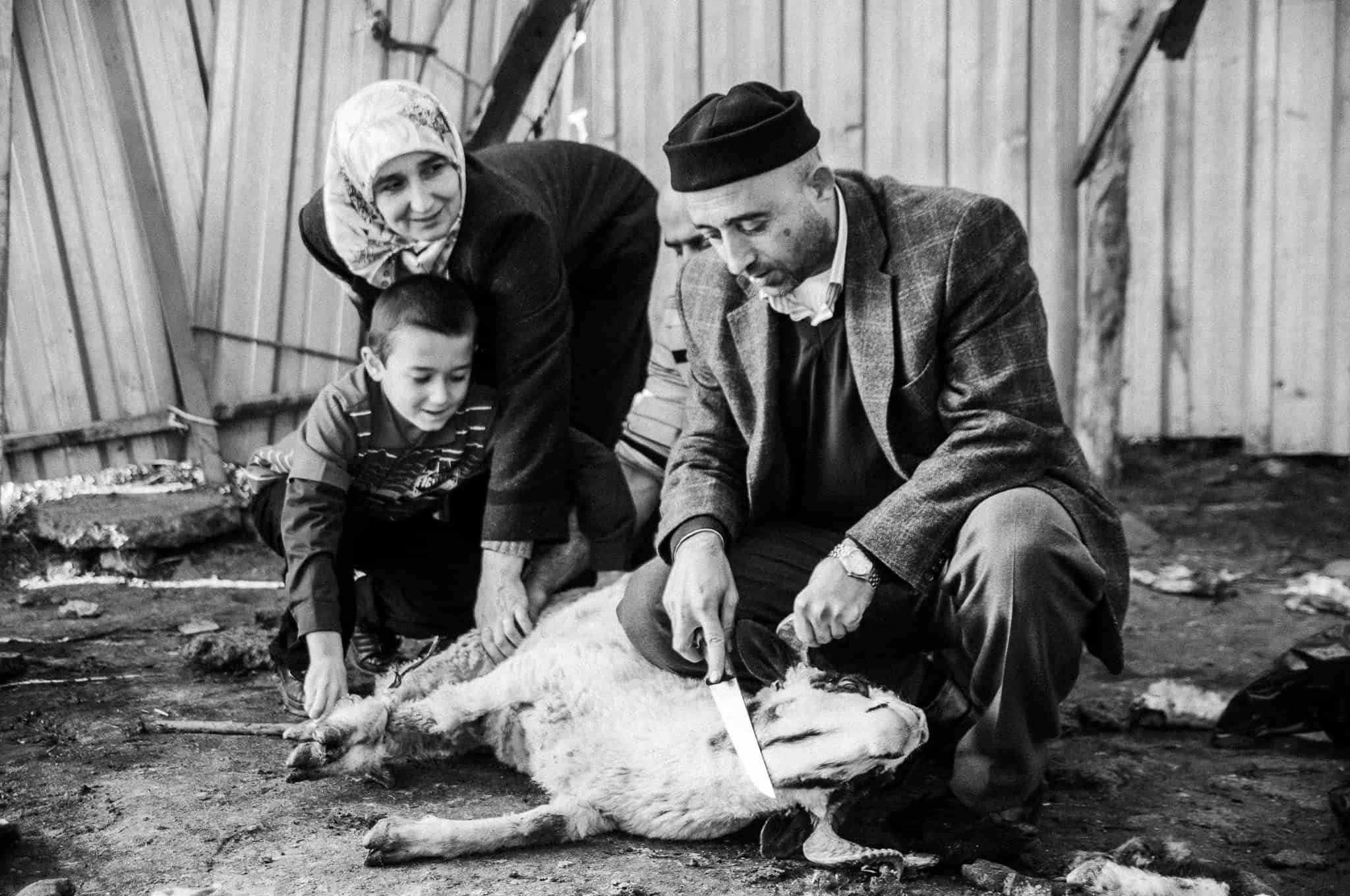
A family performs the sacrifice together. The father holds the knife. The mother, in her headscarf, reaches for it — fingertips only, as if the blade itself carries the weight of the act. Their son kneels beside them, a smear of the animal’s blood on his forehead — a folk tradition marking a child’s first sacrifice, a rite of passage passed from parent to child.
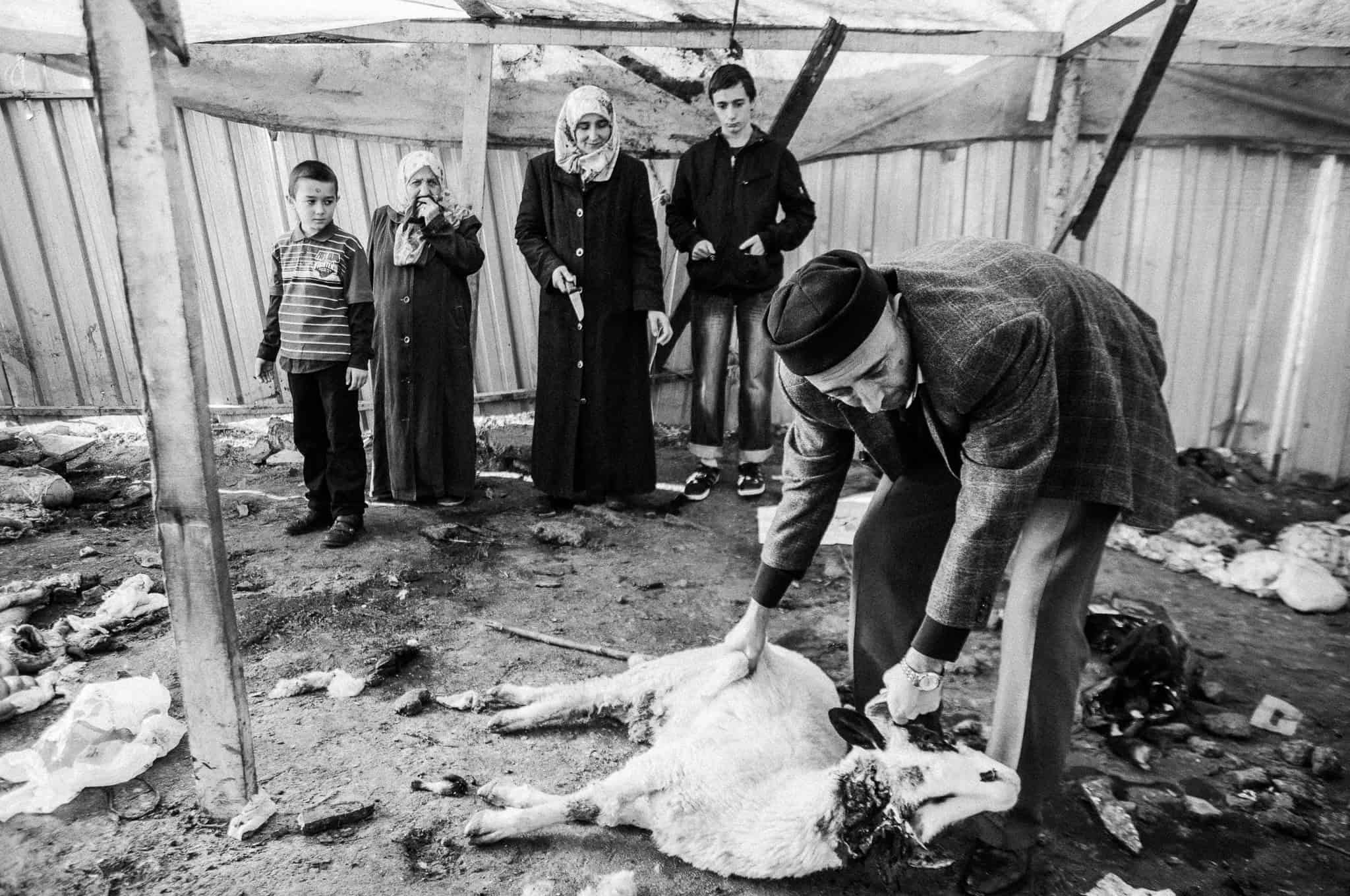
The wider scene: three generations witness the act. The grandmother covers her mouth. The young woman beside her watches in silence. A boy stands at the edge, expressionless. The man bends over the animal. This is not spectacle. It is duty.
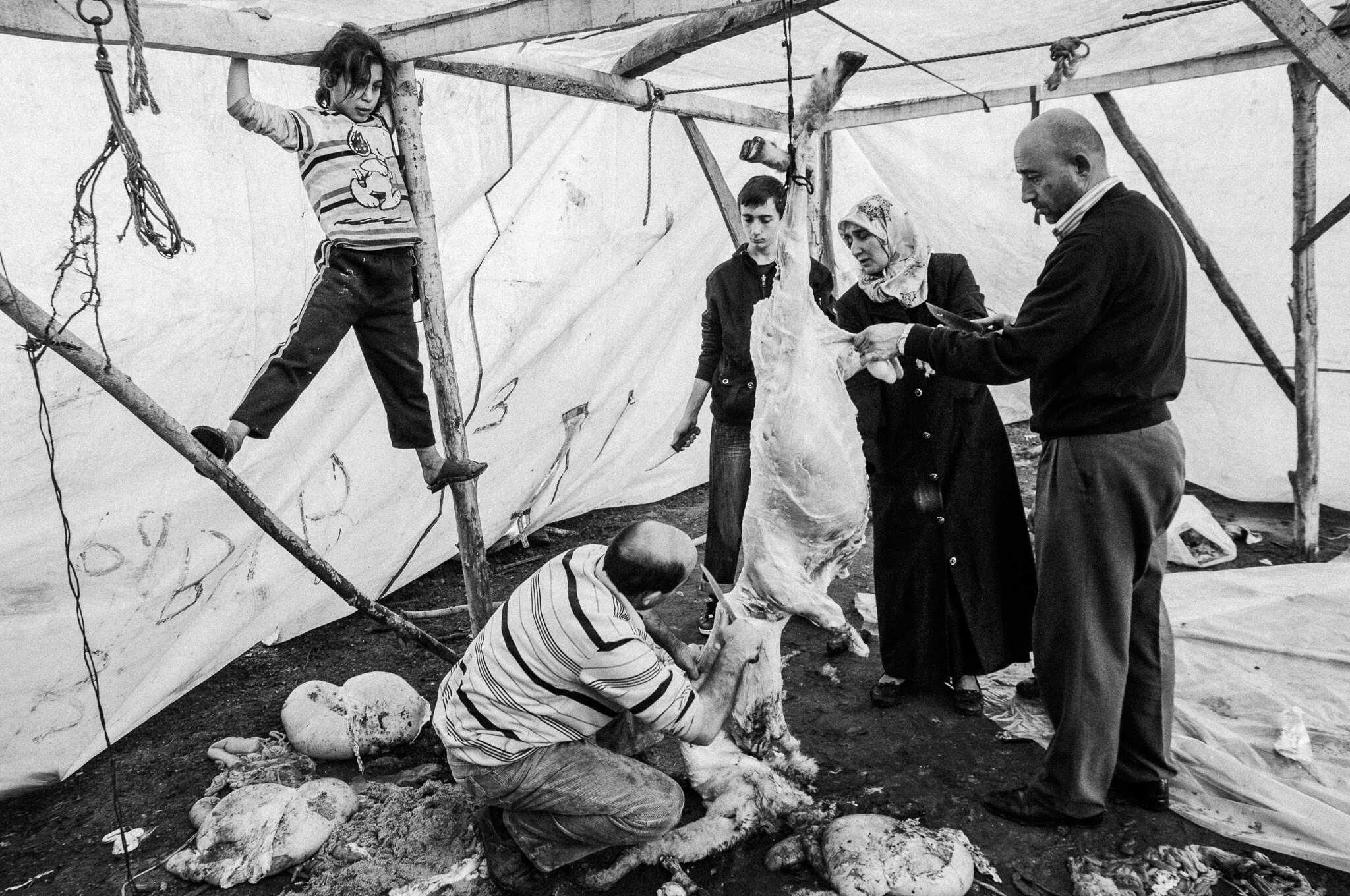
Inside the shelter, the carcass is skinned and hung. The family has gathered to collect its share. A girl climbs the wooden frame above the scene, playing — unaware, or perhaps entirely aware, that the world below her is made of blood and faith and generosity.
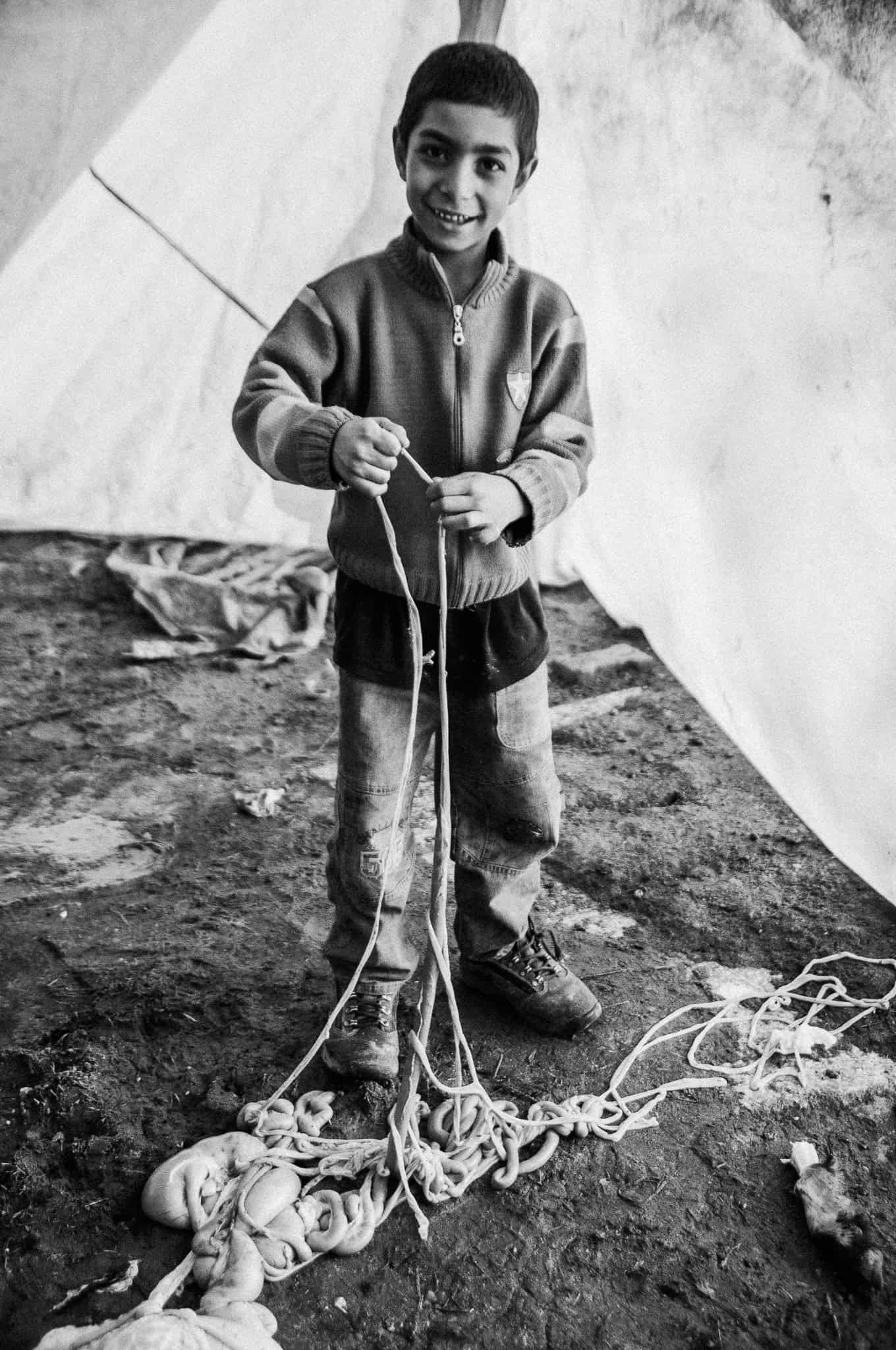
A boy holds up a length of intestine, grinning. For him this is not gore — it is the texture of a holiday, the same way another child might remember wrapping paper or candle wax. Nothing in this image is posed. Everything is inherited.
Manage Consent
To provide the best experiences, we use technologies like cookies to store and/or access device information. Consenting to these technologies will allow us to process data such as browsing behavior or unique IDs on this site. Not consenting or withdrawing consent, may adversely affect certain features and functions.
Functional
Always active
The technical storage or access is strictly necessary for the legitimate purpose of enabling the use of a specific service explicitly requested by the subscriber or user, or for the sole purpose of carrying out the transmission of a communication over an electronic communications network.
Preferences
The technical storage or access is necessary for the legitimate purpose of storing preferences that are not requested by the subscriber or user.
Statistics
The technical storage or access that is used exclusively for statistical purposes.The technical storage or access that is used exclusively for anonymous statistical purposes. Without a subpoena, voluntary compliance on the part of your Internet Service Provider, or additional records from a third party, information stored or retrieved for this purpose alone cannot usually be used to identify you.
Marketing
The technical storage or access is required to create user profiles to send advertising, or to track the user on a website or across several websites for similar marketing purposes.